

Forklift battery is an important part of the forklift, once something goes wrong, it will affect the working efficiency and even lead to downtime. In the case of forklift can’t start or insufficient power, 3 ways to determine whether the forklift battery is bad.
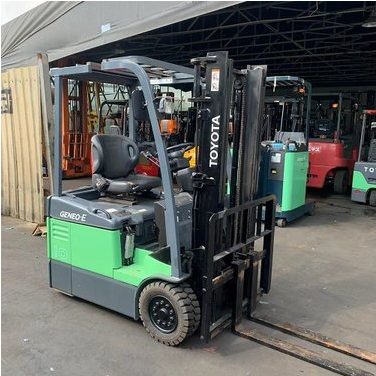
Basic inspection methods
Observe the appearance
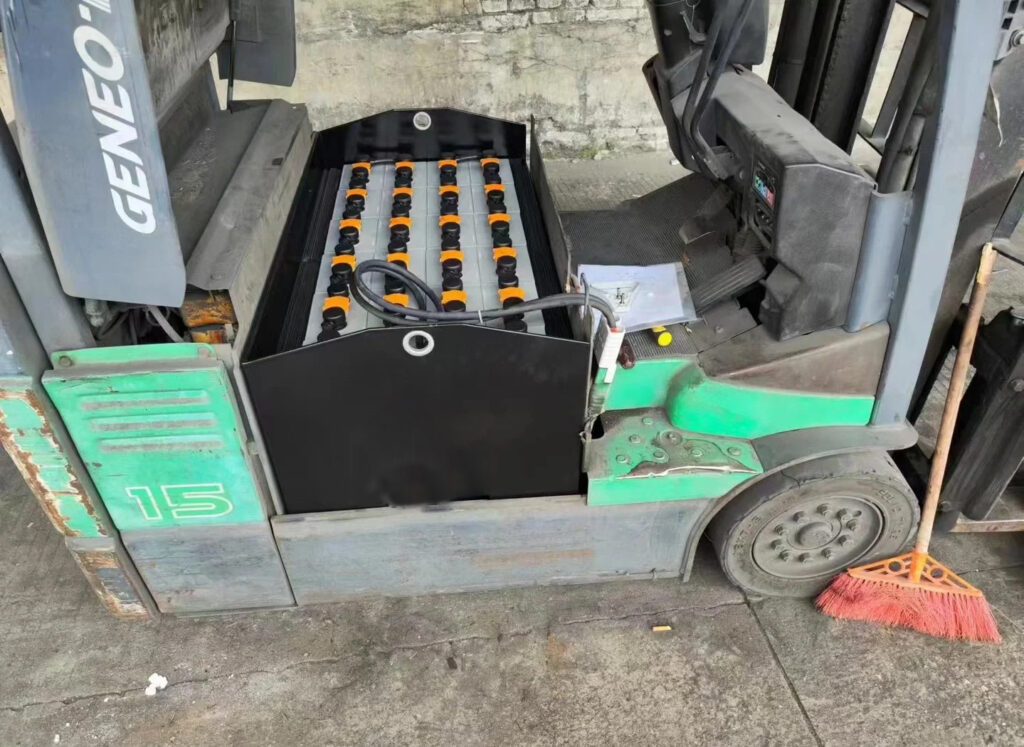
Bulging or deformation: The battery case is swollen or deformed, usually caused by overcharging, high temperature or aging.
Leakage or corrosion: Check the battery surface or terminals for electrolyte leakage (acid crystallization or corrosion marks).
Cracks or breaks: Cracks in the shell may be due to impact or aging, and need to be stopped immediately.
Charging abnormality
Failure to charge: the voltage is still lower than the rated value after a long time of charging (e.g. 48V battery should reach 52-54V when fully charged).
Severe charging heat: the battery is unusually hot when charging (slight heat is normal).
Charger malfunction: Some smart chargers will display error codes (e.g. “Battery Failure”).
tool testing method
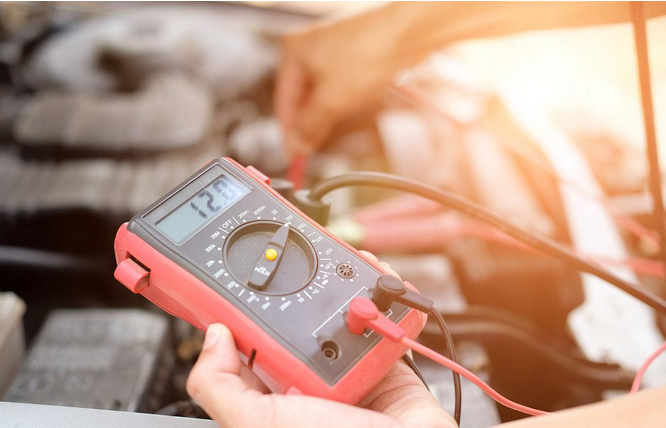
Voltage measurement by multimeter
Static voltage: Disconnect the load and charger, and measure after 2 hours of standing:
The normal voltage of a single cell of lead-acid battery is about 2.1V (e.g. 24V battery pack ≈ 25.2V).
If the voltage of a single cell is lower than 1.8V or the difference between groups is >0.2V, it may be damaged.
Load voltage: Measure when starting the forklift, if the voltage drops more than 20%, the battery is aged.
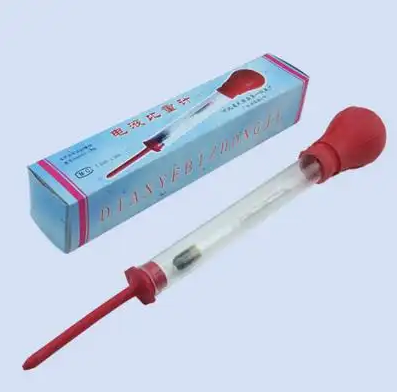
Specific gravity meter to measure the electrolyte
The specific gravity of electrolyte should be 1.26-1.28 (25℃) when fully charged, if it is lower than 1.20 or the difference between cells >0.05, it means that the pole plate is vulcanized or damaged.
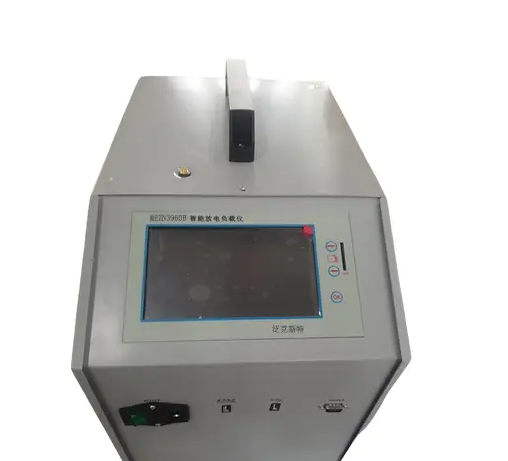
Discharge performance
Duration plummets: a battery that was working for 8 hours now only lasts 2-3 hours.
Rapid voltage drop: at full charge, the voltage drops rapidly at light loads
indirect method of judgment
Useful life
Lead-acid batteries have a normal life of 3-5 years (about 1500 cycles), lithium batteries 5-8 years, the performance will be sharply reduced after the overdue period.
Abnormal phenomenon
Odor: obvious sour or burnt smell, may be internal short circuit.
Severe self-discharge: a significant drop in power for several days after filling (normal monthly self-discharge rate of about 3-5%).
Repeatedly adding water: lead-acid batteries frequently need to be replenished, possibly due to overcharging or corrosion of the pole plate.